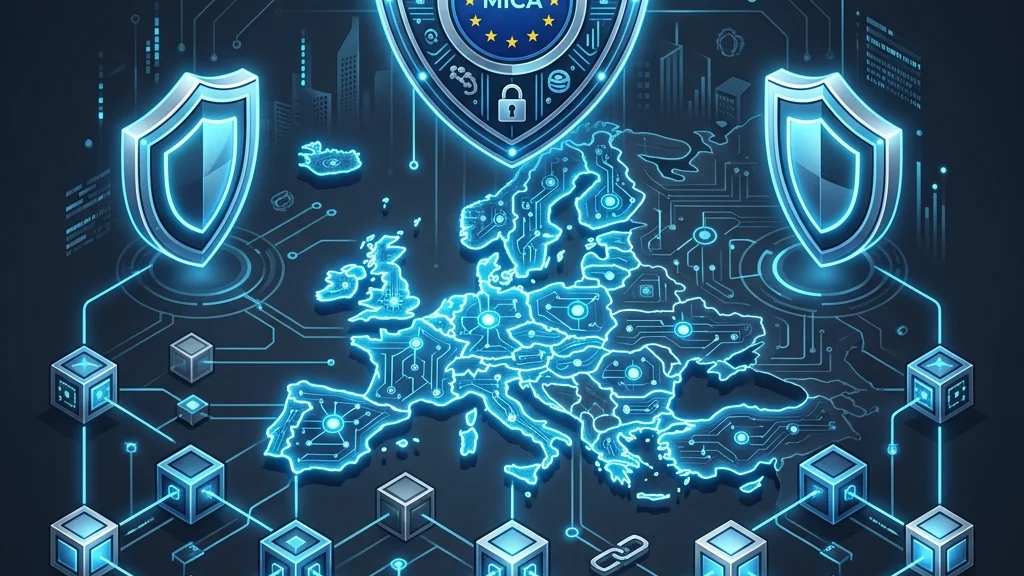
Introduction: The Dawn of Fully Regulated Digital Assets
The global cryptocurrency market has spent more than a decade operating in a regulatory grey area. While this regulatory vacuum allowed for explosive innovation and rapid development, it also exposed investors to extreme volatility, systemic failures, and high-profile collapses. However, in 2026, the era of the wild west of crypto is officially over in Europe. The European Union's landmark Markets in Crypto-Assets (MiCA) regulation is now fully implemented, bringing digital assets under a unified, comprehensive legal framework across all 27 EU member states.
MiCA represents the world's first major jurisdiction to implement a complete, codified set of rules specifically designed to regulate cryptocurrency issuers, service providers, and stablecoins. But MiCA's impact is not confined to the borders of Europe. Because of the size and economic power of the European market, EU standards are rapidly becoming the de facto global baseline for digital assets—a phenomenon known as the "Brussels Effect." This extensive guide explores the mechanics of MiCA in 2026, its impact on global stablecoins, what it means for retail and institutional investors, and how it shapes the future of global crypto markets.
The Three Pillars of MiCA: What is Regulated?
MiCA categorizes digital assets into distinct regulatory baskets, moving away from generic labels and focusing on the underlying economic reality of each token. The regulation establishes rules for three main categories of crypto-assets:
1. Electronic Money Tokens (EMTs)
EMTs are crypto-assets that reference the value of a single fiat currency (e.g., stablecoins tied to the USD or EUR). Under MiCA, EMTs are treated as digital equivalents of electronic money. The regulations governing these tokens are exceptionally strict, requiring issuers to hold robust 1:1 liquid reserves, secure e-money licenses, and face stringent limits on transaction volume.
2. Asset-Referenced Tokens (ARTs)
ARTs are tokens that aim to maintain a stable value by referencing multiple fiat currencies, commodities, or other crypto-assets (e.g., algorithmic or basket-pegged stablecoins). Issuers of ARTs must receive explicit authorization from national authorities, maintain severe capital requirements, and establish independent custodian reserves to protect investors in the event of an issuer bankruptcy.
3. Utility Tokens and Other Crypto-Assets
This category covers utility tokens that provide access to a specific service or decentralized application (dApp), as well as standard cryptocurrencies like Bitcoin (BTC) and Ethereum (ETH) that do not fit the definition of a stablecoin. While BTC and ETH do not have specific "issuers" that can be regulated, the platforms and exchanges that trade them are heavily scrutinized under MiCA.
The Stablecoin Restructuring: The Impact on USDT and USDC
One of the most immediate and disruptive battlegrounds under MiCA in 2026 is the regulation of USD-pegged stablecoins. MiCA mandates that stablecoin issuers must be licensed Electronic Money Institutions (EMIs) within the EU. This requirement has caused a massive realignment among the world's largest stablecoin providers.
- USDC (Circle): Circle proactively sought compliance by becoming the first global stablecoin issuer to secure an EMI license in Europe. By aligning with MiCA, USDC has solidified its position as the preferred stablecoin for European institutional finance, exchanges, and DeFi platforms seeking legal compliance.
- USDT (Tether): Tether has historically taken a more cautious approach to European regulation, raising concerns about MiCA's strict bank reserve requirements. Under MiCA, stablecoins that fail to meet reserve and EMI licensing standards face outright trading bans on European regulated exchanges. This has forced Tether to develop localized compliance solutions or risk losing a significant portion of its European market share to compliant competitors.
The 30% Bank Reserve Rule
To prevent a repeat of the Terra/Luna collapse, MiCA requires stablecoin issuers to hold at least 30% of their fiat reserves in cash deposits across multiple independent European banks (rising to 60% for "significant" stablecoins). For issuers managing tens of billions in assets, placing such large cash reserves in commercial banks—which carry their own counterparty risks—remains a highly debated economic challenge in 2026.
What MiCA Means for Retail and Institutional Investors
MiCA is designed with a dual mandate: protecting retail investors from fraudulent schemes while providing legal certainty to institutional players to encourage capital entry.
For Retail Investors: Safety and Transparency
Prior to MiCA, crypto issuers could launch projects with little more than a hyped social media campaign and an ambiguous whitepaper. In 2026, any project wishing to offer tokens to the public in the EU must publish an official "Crypto-Asset Whitepaper." This document is a legal prospectus that must contain clear, standardized information, free of misleading claims, and explicitly detail the risks involved. Furthermore, retail investors are granted a **14-day right of withdrawal** on direct token purchases, giving them a cooling-off period to protect against high-pressure sales tactics.
For Institutional Investors: The Green Light
For years, pension funds, venture capital firms, and traditional banks sat on the sidelines of the crypto revolution due to regulatory ambiguity. MiCA provides a clear, predictable legal framework. With standardized rules for custodianship, market abuse prevention, and auditing, traditional financial institutions in Europe can now confidently build digital asset custody systems, tokenize real-world assets (RWAs), and offer crypto-focused investment products to their clients.
Global Compliance: The "Brussels Effect" in Action
Much like the General Data Protection Regulation (GDPR) reshaped privacy laws worldwide, MiCA is currently reshaping global crypto legislation. Countries outside the EU are realizing that crypto-asset service providers (CASPs) will adopt MiCA-compliant systems globally to maintain access to European users, rather than maintaining multiple disjointed systems.
| Jurisdiction | Regulatory Approach (2026) | Comparison to MiCA |
|---|---|---|
| European Union | MiCA (Unified, codified crypto-specific law) | Baseline standard |
| United Kingdom | FCA regulated under Financial Services Act | Highly aligned, but slower to codify specific stablecoin laws |
| United States | Regulation by enforcement (SEC vs. CFTC) | Fragmented and litigious; lacking a single unified crypto code |
| Singapore / Asia | MAS licensing (Payment Services Act) | Equally strict on retail, highly supportive of institutional tokenization |
The Criticisms: Does Regulation Stifle Innovation?
Despite the optimism surrounding institutional adoption, MiCA has faced severe criticism from decentralized finance (DeFi) purists. The core of the critique lies in the regulation's friction with decentralized principles. MiCA's requirements for centralized legal entities, compliance officers, and transaction reporting are virtually impossible for truly decentralized autonomous organizations (DAOs) and permissionless smart contracts to meet.
Many developers warn that MiCA could drive cutting-edge DeFi development out of Europe and into jurisdictions with less restrictive regulatory burdens. The challenge for European regulators in 2026 is to find a balance where stablecoins and centralized exchanges are tightly regulated, while leaving breathing room for open-source, decentralized protocols to innovate.
Conclusion: A New Era of Legitimacy
The full implementation of MiCA in 2026 marks a historic turning point for the cryptocurrency industry. By replacing 27 disparate national frameworks with a single, comprehensive rulebook, the EU has brought unparalleled stability, consumer protection, and institutional trust to the digital asset market.
While the regulation introduces heavy compliance burdens and creates frictional challenges for early-stage decentralized protocols, the trade-off is clear: cryptocurrency is no longer viewed as a speculative bubble or a shadow economy. It is now a fully recognized, legally backed component of the global financial system.
Secure Your Assets with Ledger
Centralized exchanges and hot wallets are vulnerable to online threats. Keep your private keys physically isolated on a Ledger hardware wallet. Buy directly from the official store using our partner link to ensure device authenticity.
Get Your Ledger Securely →☕ Support Our Work
If you found this financial analysis valuable, you can support our independent research by sending a tip in USDT (TRC-20) to our secure cold storage address.