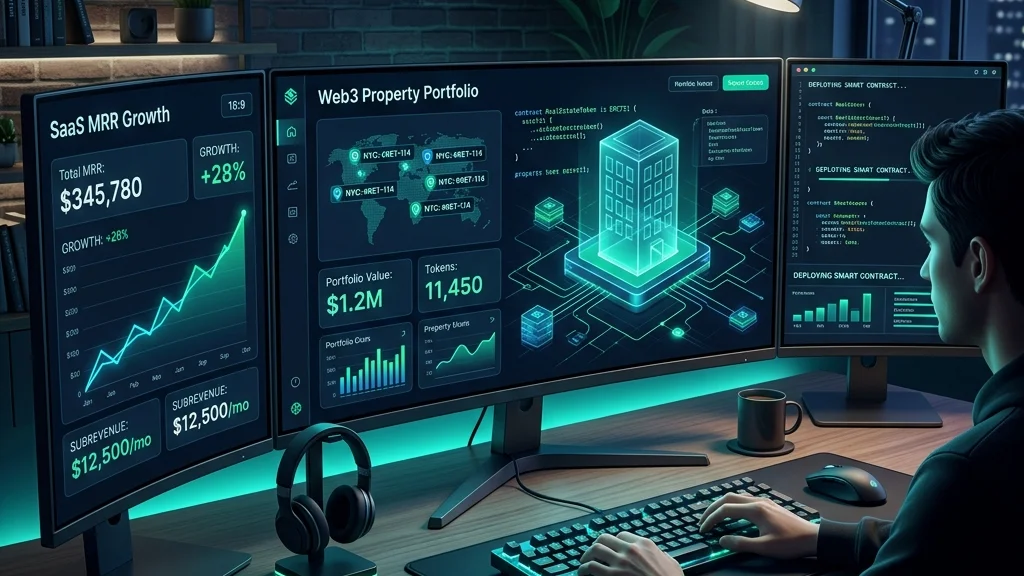
How modern software founders bridge highly active digital cash flows with hands-off, blockchain-based physical yields.
1. The Solopreneur Dilemma: High Cash Flow, High Active Risk
Many software developers build highly successful Software-as-a-Service (SaaS) products.
These micro-SaaS businesses often generate substantial Monthly Recurring Revenue (MRR).
With profit margins frequently exceeding 85%, solopreneurs face a massive influx of corporate cash.
However, this rapid wealth generation hides a structural vulnerability: systemic active risk.
Why is SaaS Inherently Volatile?
- API Dependency Risk: A single platform policy change can break your software integration overnight.
- Technological Shift: Rapid advancements in artificial intelligence can render simple wrappers obsolete.
- Low Barriers to Entry: Competitors can quickly clone features and undercut your pricing.
- Platform Lock-in: Changes in search engine algorithms or App Store rules can cut your traffic instantly.
Reinvesting 100% of your profits back into your software company compounds your risk concentration.
If your software business fails, your entire investment fails with it.
Traditional wealth preservation channels, like bonds or index funds, feel too slow.
They also lack the digital-first efficiency that software founders expect.
This gap has created a new financial model: The Solopreneur Wealth Loop.
2. What are Tokenized Real-World Assets (RWAs)?
Real-World Asset (RWA) tokenization is the process of putting physical assets onto a blockchain.
These assets can include residential buildings, commercial real estate, or government treasury bills.
Instead of buying a whole property, you buy digital tokens representing fractional ownership.
How Does the Legal and Technical Structure Work?
- The Property LLC: A Special Purpose Vehicle (SPV) is registered to hold the legal title of the physical property.
- Security Tokens: The ownership shares of this LLC are digitized as cryptographic tokens on a public blockchain (like Polygon or Ethereum).
- Automated Smart Contracts: Rent paid by physical tenants is collected, converted to stablecoins (USDC), and sent automatically to token holders.
This legal framework turns physical real estate into a programmatic, digital-first asset.
You do not deal with real estate agents, mortgage brokers, or property maintenance.
All operations are handled by professional management firms and executed via smart contracts.
3. Why SaaS Founders Choose Tokenized RWAs for Passive Income
For a software solopreneur, tokenized RWAs offer several unique operational advantages.
Lower Investment Minimums and Fast Diversification
Traditional real estate requires a large cash down payment, often between $50,000 and $100,000.
This forces you to tie up significant liquidity in a single property and a single location.
RWA tokenization platforms lower the entry barrier to as low as $50 per token.
If your SaaS makes $15,000 in monthly profit, you can invest $5,000 immediately.
You can split this amount across 50 different properties in 10 different cities.
This gives you instant geographic diversification and protects your capital from local market drops.
Zero Operational Headache
Your most valuable asset is your time and cognitive focus.
Traditional landlord tasks, like managing tenants or fixing broken pipes, drain your energy.
Tokenized RWA platforms partner with professional property managers.
The property management fees are deducted from the gross rent before distribution.
Your rental yields are deposited directly into your Web3 wallet without your involvement.
This absolute division of labor keeps your investment 100% passive.
High Liquidity and Fast Exit Options
Physical properties are difficult and slow to sell, often taking months.
Transaction costs, including agent fees and closing costs, can eat up 5% to 10% of the property value.
Security tokens, however, exist on public blockchain ledgers.
Most compliant platforms offer secondary marketplaces or liquidity pools.
This allows founders to sell their fractional shares in days or hours if they need to redeploy capital.
4. Traditional Real Estate vs. Tokenized RWA Real Estate
| Feature | Traditional Real Estate | Tokenized RWA Real Estate |
|---|---|---|
| Minimum Capital | Very High ($20,000 - $100,000+) | Very Low ($50 - $100) |
| Transaction Speed | Slow (30 to 90 Days) | Fast (Instant execution) |
| Liquidity Level | Extremely Low | Moderate to High |
| Management Effort | High (Tenants, repairs, agents) | Zero (Automated via Smart Contracts) |
| Diversification | Low (Single property focus) | High (Multiple properties/locations) |
| Payout Frequency | Monthly (Manual bank transfers) | Weekly or Daily (Stablecoins) |
| Legal Overhead | High (Individual title registrations) | Low (Handled by the token issuer) |
5. The Step-by-Step Blueprint to Set Up the Wealth Loop
Setting up a corporate wealth loop requires structured capital routing.
Follow this step-by-step process to automate your wealth compounding.
Step 1: Structure Your Corporate Entities
Never invest personal funds directly if your SaaS is operated under a business.
- Operating Company (OpCo): The business entity that owns your SaaS code and collects subscription fees.
- Holding Company (HoldCo): A separate entity that owns the OpCo.
- The Workflow: Pass SaaS profits to your HoldCo as dividends, then use the HoldCo to purchase RWA tokens.
This structure insulates your real estate holdings from any operational liabilities of the SaaS.
Step 2: Establish a Secure Web3 Treasury Wallet
Since you are managing business capital, security is paramount.
- Hardware Wallets: Use dedicated corporate hardware wallets (like Ledger or Trezor) to hold your private keys.
- Multi-Signature Setup: Implement a multi-sig vault (like Safe) requiring multiple keys to approve outbound transfers.
Step 3: Complete Entity KYC on Compliant Platforms
To purchase regulated security tokens, your business must pass KYC and AML checks.
- Select platforms that comply with SEC regulations (such as Regulation D or Regulation S).
- Prepare your business registration files, EIN documents, and beneficial owner passports.
- Popular Platforms: Look into established issuers like RealT or Lofty.ai.
Step 4: Automate Your Crypto Onramps
Create a pipeline to convert fiat bank deposits into digital stablecoins.
- Connect your business bank account to a regulated exchange like Coinbase Prime or Circle.
- Set up a monthly schedule to move 20% to 30% of net profits to the exchange.
- Convert the fiat money into USDC and send it to your corporate Web3 wallet.
Step 5: Diversify and Compound Your Yields
Implement a strict Dollar-Cost Averaging (DCA) strategy.
- Spread your incoming USDC across high-yield residential properties and stable commercial assets.
- Allocate a portion to tokenized US Treasury Bills (like Ondo Finance) for low-risk 4-5% yields.
- Accumulate your daily/weekly rental payouts and automatically buy more tokens.
This creates a self-sustaining compound engine that grows independently of your software sales.
6. How to Mitigate Tokenized RWA Risks
Investing in tokenized physical assets comes with unique risks that require careful planning.
Smart Contract Exploits
The Risk: Software bugs in the token's smart contract could allow attackers to steal funds.
The Mitigation: Only use platforms that have been audited by respected security firms (such as OpenZeppelin or CertiK). Avoid newly launched platforms; prioritize those with at least two years of exploit-free history.
Platform Insolvency
The Risk: The tokenization platform goes bankrupt, threatening your ownership title.
The Mitigation: Ensure the platform uses a bankruptcy-remote structure. The physical property must be owned by an independent LLC. The token holders must legally own the shares of that LLC. If the platform shuts down, the LLC remains, and token holders can vote to hire a new manager.
Regulatory and Tax Changes
The Risk: Changing laws might restrict secondary trading or affect corporate tax status.
The Mitigation: Avoid unregulated, anonymous DeFi platforms. Only buy compliant security tokens that require KYC verification. Work with a corporate tax advisor who understands blockchain assets and corporate dividend distributions.
7. Conclusion: Achieve True Solopreneur Sovereignty
True independence is impossible if your livelihood relies on a single active software product.
The Solopreneur Wealth Loop bridges high-growth software revenue with the stability of physical real estate.
By automated routing of SaaS cash flow into tokenized assets, you build a resilient, passive financial foundation.
Let your code scale your business, and let tokenized real-world assets secure your wealth.
Secure Your Assets with Ledger
Centralized exchanges and hot wallets are vulnerable to online threats. Keep your private keys physically isolated on a Ledger hardware wallet. Buy directly from the official store using our partner link to ensure device authenticity.
Get Your Ledger Securely →☕ Support Our Work
If you found this financial analysis valuable, you can support our independent research by sending a tip in USDT (TRC-20) to our secure cold storage address.