Key Takeaways
- Have a Strategy: Never invest without defining your long-term financial goals and risk tolerance first.
- Control Emotions: Avoid panic selling during market dips and FOMO buying during irrational market highs.
- Diversify: Spread your investments across different sectors and index funds to mitigate single-stock risk.
- Ignore Market Timing: Focus on Dollar-Cost Averaging (DCA) rather than trying to predict market bottoms and tops.
Navigating the Emotional Rollercoaster of Investing
Entering the stock market can be a daunting experience. With thousands of stocks to choose from, constant news cycles, and volatile prices, it is easy to make critical errors that can set your financial journey back by years. Understanding and avoiding the most common psychological and strategic traps is crucial for long-term success.
The Psychological Battle
Investing is often less about numbers and more about psychology. Human beings are hardwired to react to fear and greed, two emotions that run rampant on Wall Street. Overcoming these natural instincts is the hardest part of becoming a successful investor. Here are the top 5 mistakes beginner investors make and how you can avoid them.
1. Investing Without a Clear Plan
Many beginners jump into the market blindly, buying stocks based on a tip from a friend or a trending hashtag on social media. This is gambling, not investing. A lack of strategy means you have no criteria for when to buy, when to sell, and what success looks like.
The Fix: Define your goals. Are you investing for retirement in 30 years, a house down payment in 5 years, or passive income today? Write down an Investment Policy Statement outlining your target asset allocation, risk tolerance, and rules for buying and selling. Stick to this plan rigorously.
2. Letting Emotions Rule Decisions
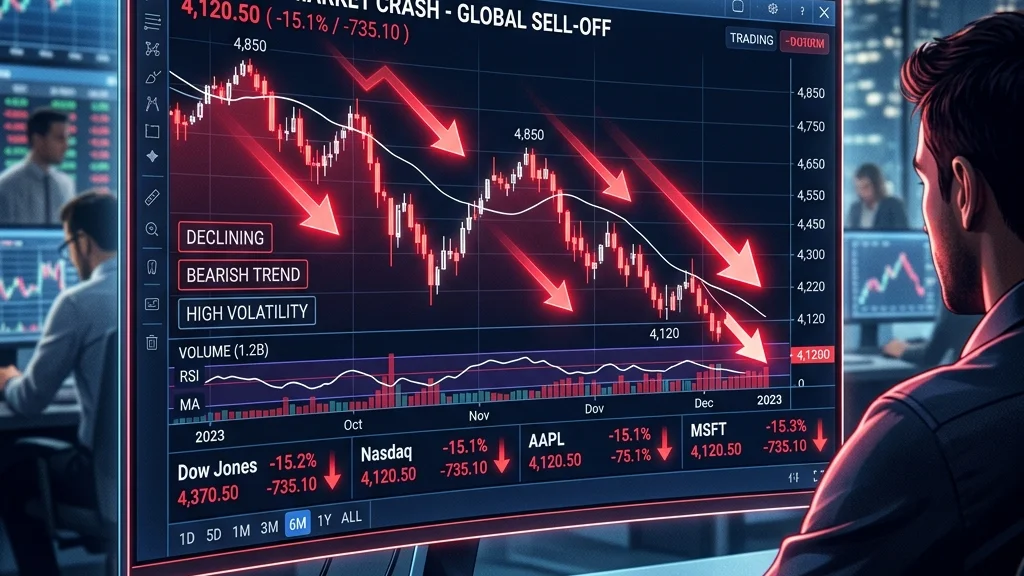
When the market drops 10% in a week, the media blasts headlines about impending doom. The natural human response is fear, leading many beginners to panic sell their holdings at a loss. Conversely, when a stock is skyrocketing, FOMO (Fear Of Missing Out) kicks in, causing investors to buy at the absolute peak.
The Fix: Detach your emotions from your portfolio. Understand that volatility is a normal feature of the stock market, not a bug. Historically, the market has survived world wars, pandemics, and financial crises, always recovering to reach new highs. When the market dips, view it as a discount sale on high-quality assets.
3. Lack of Diversification
Beginners often fall in love with a single company—perhaps a popular tech brand or an EV manufacturer—and pour all their capital into that one stock. This concentration is incredibly risky. If that company faces a scandal, a regulatory crackdown, or a bad earnings report, your entire portfolio is decimated.
The Fix: Don't put all your eggs in one basket. Diversify across different sectors, company sizes, and geographic regions. The simplest way to achieve broad diversification is by investing in low-cost index funds or Exchange-Traded Funds (ETFs) that track major benchmarks like the S&P 500.
| Investment Style | Risk Profile | Example |
|---|---|---|
| Single Stock Concentration | Extreme Risk | 100% portfolio in Company X |
| Sector-Specific ETF | Moderate Risk | 100% portfolio in Tech ETF |
| Broad Market Index Fund | Low/Balanced Risk | Vanguard S&P 500 ETF (VOO) |
4. Trying to Time the Market
The holy grail of investing is buying at the absolute bottom and selling at the absolute top. Unfortunately, it is a fool’s errand. Even professional money managers fail to consistently time the market. Waiting on the sidelines for the "perfect moment" to invest usually results in missing out on major gains, as the best days in the market often occur immediately after the worst days.
The Fix: Focus on "time in the market" rather than "timing the market." Utilize Dollar-Cost Averaging (DCA), which involves investing a set amount of money at regular intervals (e.g., $500 on the 1st of every month), regardless of what the market is doing. This strategy smooths out volatility and removes the stress of trying to predict the future.
5. Ignoring Fees and Taxes
Many beginners ignore the hidden costs of investing. High management fees on mutual funds, frequent trading commissions, and short-term capital gains taxes can dramatically erode your returns over time. A 2% management fee might sound small, but over 30 years, it can consume a massive chunk of your total wealth.
The Fix: Be hyper-aware of costs. Choose low-cost index funds with expense ratios below 0.10%. Minimize trading frequency to avoid short-term capital gains taxes (which are taxed at your higher ordinary income rate) and utilize tax-advantaged accounts like IRAs or 401(k)s whenever possible.
Frequently Asked Questions (FAQ)
Why is diversification so important in investing?
Diversification spreads your risk. If one company or sector performs poorly, the impact on your overall portfolio is minimized by the positive performance of other investments.
What is Dollar-Cost Averaging (DCA)?
Dollar-Cost Averaging is the strategy of investing a fixed amount of money at regular intervals (like every month) regardless of market conditions. It removes emotion from investing and helps smooth out market volatility.
Conclusion
The stock market is a powerful tool, but it requires patience, discipline, and emotional fortitude. By recognizing these common pitfalls—trading without a plan, succumbing to emotion, failing to diversify, trying to time the market, and ignoring costs—you put yourself miles ahead of the average novice investor. Stick to the fundamentals, think long-term, and let compounding do the heavy lifting.
☕ Support Our Work
If you found this financial analysis valuable, you can support our independent research by sending a tip in USDT (TRC-20) to our secure cold storage address.