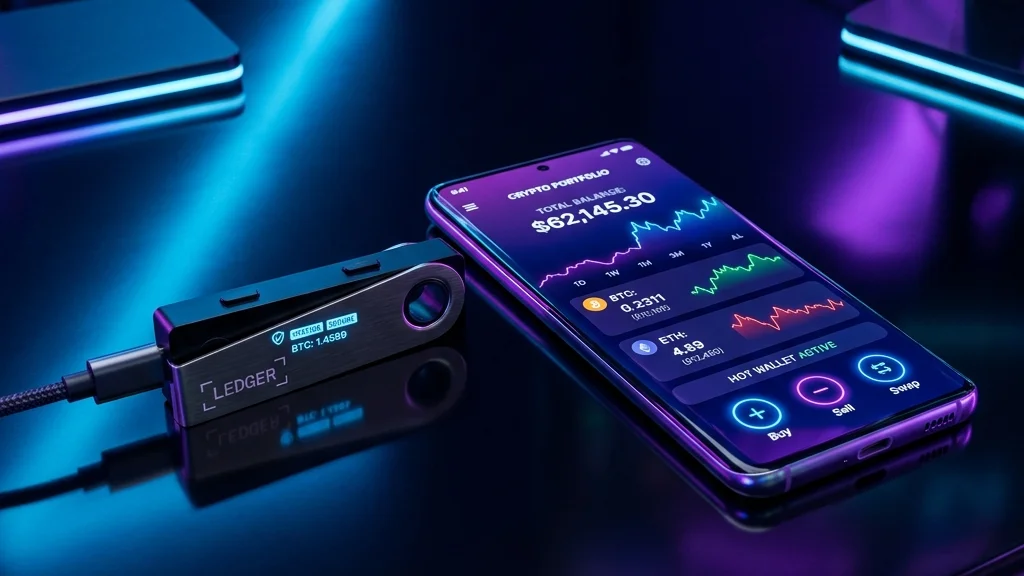
Entering the decentralized economy requires a fundamental shift in how you think about asset management. Unlike traditional banking, where an institution guards your money, cryptocurrency puts you completely in charge. You act as your own bank, your own security guard, and your own customer service.
As you accumulate Bitcoin, Ethereum, and various Web3 assets in 2026, the most critical decision you will make is how to store them. The debate almost always boils down to two primary categories: Hot Wallets (Software) and Cold Wallets (Hardware). Understanding the strengths, vulnerabilities, and ideal use cases for each is essential for surviving and thriving in the crypto space. Here is the ultimate comparison.
What is a Hot Wallet?
A "Hot Wallet" is any cryptocurrency wallet that is connected to the internet. These come in the form of mobile applications on your smartphone (like Trust Wallet or Coinbase Wallet) or browser extensions on your desktop (like Phantom or MetaMask). They are incredibly accessible and usually completely free to download.
The Pros of Hot Wallets
- Ultimate Convenience: Because they are always online, executing trades, buying NFTs, or interacting with decentralized finance (DeFi) protocols takes only a few seconds.
- Accessibility: You can manage your portfolio anytime, anywhere, directly from your phone.
- Free to Use: Creating a hot wallet costs nothing; you only pay network transaction fees (gas) when moving funds.
The Cons of Hot Wallets
- Vulnerability to Hacks: Since the device storing your private keys (your phone or computer) is connected to the internet, it is susceptible to malware, spyware, and sophisticated hacking attempts.
- Smart Contract Risks: Hot wallets make it very easy to accidentally sign a malicious smart contract, which can drain your funds instantly if you aren't paying attention.
What is a Cold Wallet (Hardware Wallet)?
A "Cold Wallet" is a physical device—often resembling a USB thumb drive—that stores your cryptocurrency offline. Brands like Ledger and Trezor dominate this space. When you want to make a transaction, you plug the device into your computer or connect it via Bluetooth to your phone. The crucial difference is that the private keys never leave the physical device; the transaction is signed inside the device and then broadcasted to the internet.
The Pros of Cold Wallets
- Unparalleled Security: Because the keys are kept entirely offline in an isolated "air-gapped" environment, remote hackers cannot access your funds. Even if your computer is infected with a virus, your crypto remains safe inside the hardware wallet.
- Physical Confirmation: Hardware wallets require you to press physical buttons on the device to approve a transaction, making it impossible for a hacker to drain your account remotely.
The Cons of Cold Wallets
- Upfront Cost: Unlike free software wallets, quality hardware wallets cost between $50 and $200.
- Less Convenient: Daily trading is cumbersome because you must physically have the device with you to authorize transactions.
The Ideal Strategy: The Hybrid Approach
For absolute beginners, choosing between hot and cold storage shouldn't be an "either/or" decision. The smartest investors in 2026 utilize a hybrid strategy, assigning specific roles to different wallets.
The Checking Account (Hot Wallet): Use a hot wallet like Phantom or Trust Wallet for your daily activities. Keep a smaller amount of funds here—only what you intend to actively trade, spend on NFTs, or use for DeFi staking within the month. If this wallet is compromised, the loss should not be financially devastating.
The Savings Vault (Cold Wallet): Use a hardware wallet like the Trezor Safe 3 or Ledger Nano S Plus as your long-term vault. The vast majority of your wealth—your long-term Bitcoin and Ethereum holdings—should live here. You only interact with this wallet a few times a year to deposit new savings.
Conclusion
Both hot and cold wallets serve indispensable roles in the modern digital economy. Hot wallets prioritize speed, user experience, and Web3 integration, while cold wallets prioritize absolute, impenetrable security. By understanding the distinct advantages of each and deploying a hybrid "checking and savings" strategy, you can enjoy the dynamic world of crypto without losing sleep over the safety of your assets.
Frequently Asked Questions (FAQ)
Q1: Do cold wallets actually hold my coins inside the USB drive?
A: No. Cryptocurrencies exist entirely on the blockchain. Your hardware wallet merely holds the "private keys" (the cryptographic passwords) required to move those coins. If the device breaks, your coins are still safe on the blockchain.
Q2: Can I connect my hardware wallet to my hot wallet?
A: Yes! This is a highly recommended practice in 2026. You can connect a Ledger or Trezor to a hot wallet interface like MetaMask or Phantom. You get the beautiful software interface, but you still have to physically press the buttons on your hardware device to approve any transactions.
Q3: Is keeping my crypto on an exchange like Binance considered a hot wallet?
A: Yes, it is technically a hot wallet, but with a critical difference: it is a "custodial" wallet. The exchange holds the private keys, not you. If the exchange is hacked or goes bankrupt, your funds are at risk. True hot wallets (like Trust Wallet) are "non-custodial," meaning only you control the keys.
Secure Your Assets with Ledger
Centralized exchanges and hot wallets are vulnerable to online threats. Keep your private keys physically isolated on a Ledger hardware wallet. Buy directly from the official store using our partner link to ensure device authenticity.
Get Your Ledger Securely →☕ Support Our Work
If you found this financial analysis valuable, you can support our independent research by sending a tip in USDT (TRC-20) to our secure cold storage address.